


Oberlan Luna
Oberlan Luna is a conceptual artist whose practice focuses on the exploration of new media art. He graduated from the Fine Art (Sculpture) programme at the Indonesian Institute of the Arts (ISI) Yogyakarta in 2021. His work proposes the concept of “Mindscape”—a way of rethinking inherited dogmatic frameworks that are often misleading or no longer relevant in contemporary contexts.
Through the combination of visual and auditory elements, Oberlan creates immersive works that invite audiences to interact, question, and reflect on social realities, particularly issues related to mental health and human interconnectedness. He has participated in numerous group exhibitions and art competitions, receiving the Best Sculpture Award at ISI Yogyakarta (2021). He was also a finalist for the BaCAA – Bandung Contemporary Art Award (2019, 2022), Erlangga Installation Art Award (2022), and Basoeki Abdullah Art Award (2024). Oberlan continues to explore new approaches within conceptual art that engage closely with everyday social life.

Title : We don’t know what we don’t know
What if everything we recognise as awareness is merely a repetition of knowledge shaped by habit? What if the act of “protecting the Earth”, so loudly proclaimed in digital spaces, is nothing more than an empty gesture trapped within the aesthetics of modern virtue?
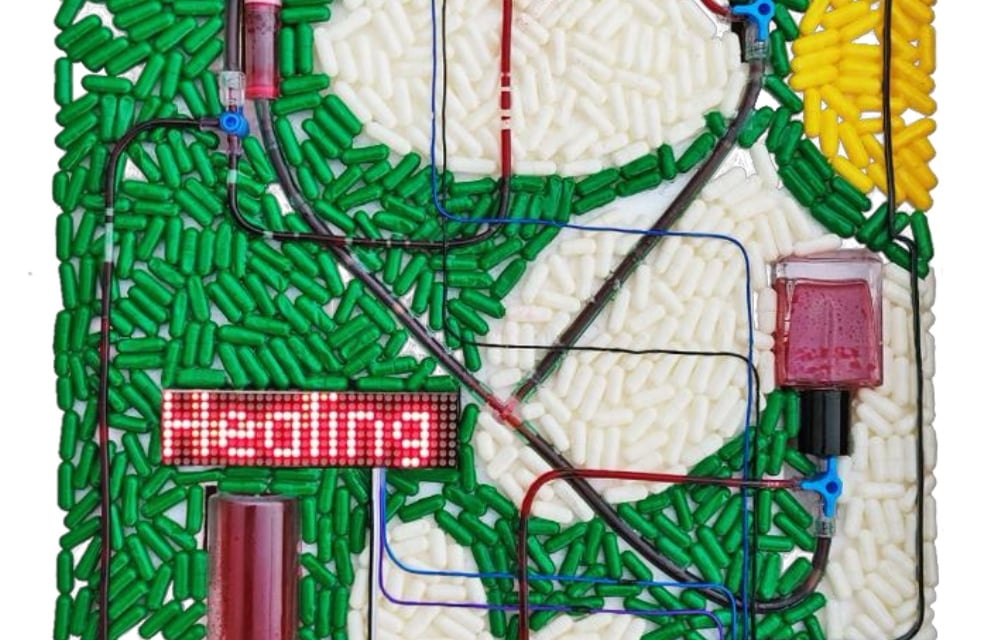
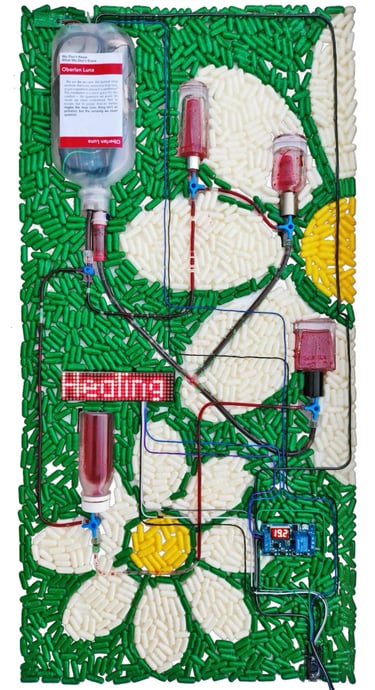
This installation emerges as a response to a collective absurdity, an era in which we believe we are sufficiently aware, sufficiently concerned, sufficiently informed. Bottles of consumption, once promising allure, identity, confidence, and desire, now hang like intravenous drip bottles that never truly heal. They are ensnared within systems they themselves have produced, becoming remnants of needs we have never fully understood. Some objects are no longer even recognisable as things that once mattered; they stand instead as evidence that we worship many things without ever questioning why.
Each element is connected through infusion tubes, forming an illusory circulation of a living system, like a body continuously pumped in order to survive. This circulation raises uneasy questions: who is sustaining whom? who is draining whom? Moving text displays quiet, lingering questions about our role as humans, within consumption, within care, within the absurdity of time that endlessly resets itself, as if always starting anew, yet never truly changing. Much like how we buy, use, discard, and desire again. A ritual emptied of meaning, yet persistently maintained because we are rarely given the pause to think.
This installation does not seek to assign blame or moral judgement. Instead, it offers a space of suspension, a moment to listen. It suggests that ignorance is not simply a matter of not knowing, but more often a condition of believing that we already know enough. It is a portrait of silence filled with routines of consumption, where forms of “ecological awareness” merge with aesthetics but remain detached from concrete action.
Perhaps what is truly dangerous is not only pollution of air, soil, or water, but ignorance carefully packaged as self-satisfaction.
Size : 40 x 5 x 80cm
Medium : Installation comprising capsules, infusion bottles, electronic components, and sensors
Year : 2025
Title : We don’t know what we don’t know
What if everything we recognise as awareness is merely a repetition of knowledge shaped by habit? What if the act of “protecting the Earth”, so loudly proclaimed in digital spaces, is nothing more than an empty gesture trapped within the aesthetics of modern virtue?
This installation emerges as a response to a collective absurdity, an era in which we believe we are sufficiently aware, sufficiently concerned, sufficiently informed. Bottles of consumption, once promising allure, identity, confidence, and desire, now hang like intravenous drip bottles that never truly heal. They are ensnared within systems they themselves have produced, becoming remnants of needs we have never fully understood. Some objects are no longer even recognisable as things that once mattered; they stand instead as evidence that we worship many things without ever questioning why.
Each element is connected through infusion tubes, forming an illusory circulation of a living system, like a body continuously pumped in order to survive. This circulation raises uneasy questions: who is sustaining whom? who is draining whom? Moving text displays quiet, lingering questions about our role as humans, within consumption, within care, within the absurdity of time that endlessly resets itself, as if always starting anew, yet never truly changing. Much like how we buy, use, discard, and desire again. A ritual emptied of meaning, yet persistently maintained because we are rarely given the pause to think.
This installation does not seek to assign blame or moral judgement. Instead, it offers a space of suspension, a moment to listen. It suggests that ignorance is not simply a matter of not knowing, but more often a condition of believing that we already know enough. It is a portrait of silence filled with routines of consumption, where forms of “ecological awareness” merge with aesthetics but remain detached from concrete action.
Perhaps what is truly dangerous is not only pollution of air, soil, or water, but ignorance carefully packaged as self-satisfaction.
Size : 40 x 5 x 80cm
Medium : Installation comprising capsules, infusion bottles, electronic components, and sensors
Year : 2025