
Erzhal Umamit
Erzhal Umamit is an artist working with a mixed-media approach, driven by a deep interest in contemporary artistic practices. This passion continues to motivate him to explore and develop his creative potential. Currently, his work focuses on documenting and interpreting various aspects of life in Maluku, ranging from its natural landscapes and rich cultural heritage to the social dynamics of its communities.
Through his artistic practice, Erzhal seeks to present nuanced narratives that reflect the identity and lived experiences of Maluku a region known for its cultural diversity and distinctive character.
In addition to his individual practice, Erzhal is actively involved in several art collectives, including Pattimura Creative Space and jalanjalanbandaneira. These collaborative environments provide a platform for exchanging ideas, sharing experiences, and fostering creative dialogue, which continually enrich and expand his artistic perspective.
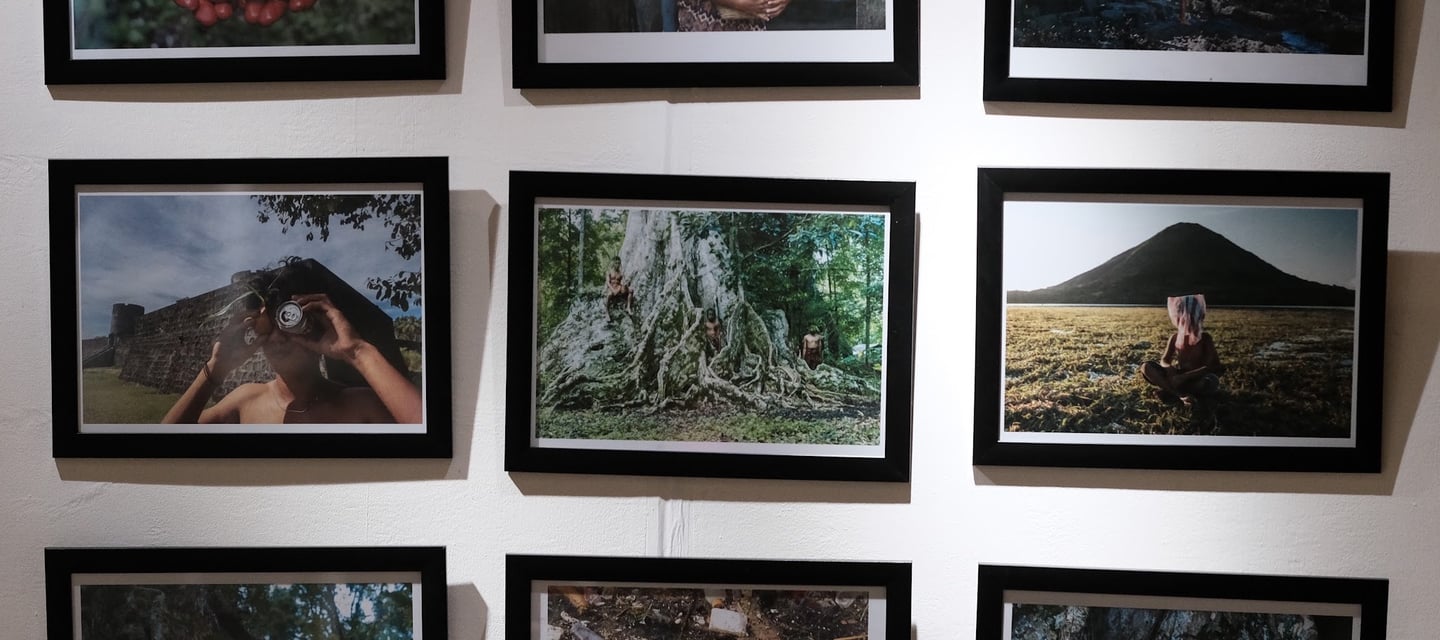
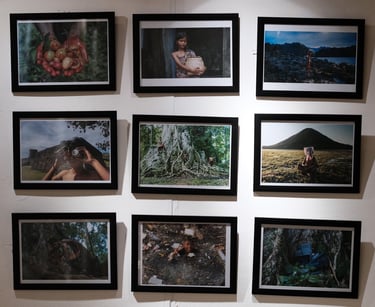
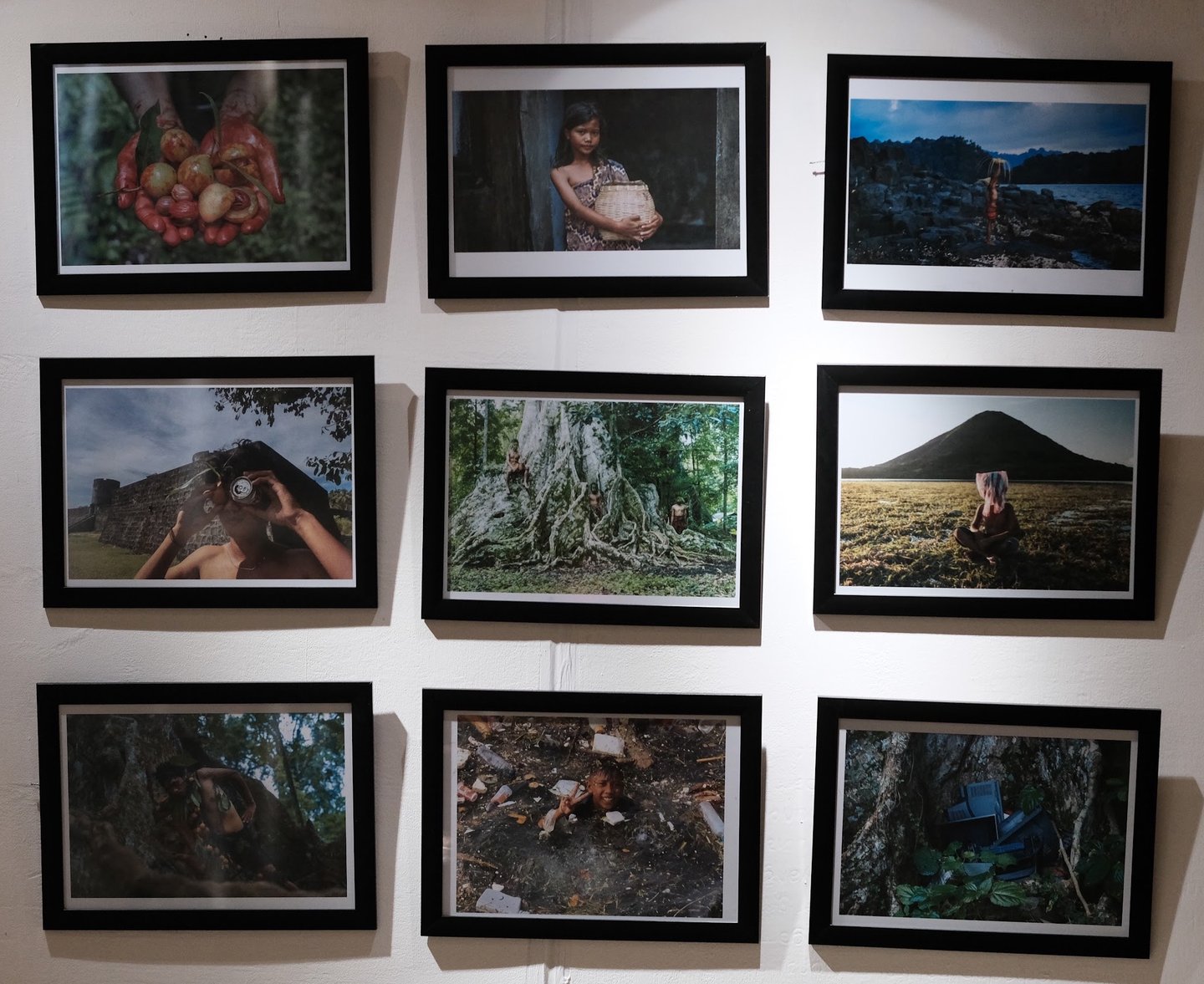
Title : Apa Kabar Banda Hari Ini / What Has Become of Banda Today
Pala a fragrant spice known internationally as nutmeg was once the reason the world fought over Banda Neira. In the eyes of colonial powers, it was not merely a seasoning, but scented gold: a commodity capable of controlling markets and political power. For the people of Banda, however, pala was not always a blessing. It marked the beginning of a long and painful history.
Four centuries ago, on 8 May 1621, one of the earliest genocides in the archipelago took place in Banda Neira. Forty-four Banda leaders were executed at Fort Nassau by Dutch colonial forces, with ronin acting as executioners. Prior to this massacre, the indigenous Banda population was forcibly displaced to the Kei Islands, forming a community now known as Banda Eli.
That wound has never fully healed. Today, Banda no longer faces swords or firearms. Instead, the island is subjected to a quieter and more insidious form of destruction. Plastic waste, consumer refuse, and the by-products of tourism-driven development gradually seep into the body of the island. They contaminate the sea, disrupt ecological balance, and slowly extinguish life.
This is no longer genocide, but ecocide the systematic destruction of the environment, carried out through subtler means: the polished façade of tourism, uncontrolled development legitimised by regulatory frameworks, and a persistent greed that has never truly left. History appears to repeat itself, only in a different form. Pala once justified colonial domination; today, waste has become a new wound. Through this work, I invite viewers to see Banda not merely as an exotic landscape, but as a living body one that continues to be violated by us, by humans.
Dimention : 90 x 60cm
Medium : Print
Year : 2024