


Elroy Ramantan
Elroy Ramantan (born in Brunei) is an artist and curator whose practice centres on cultural advocacy and the empowerment of marginalised identities. Through photography, mixed media, and community-based installations, he documents and challenges dominant narratives surrounding statelessness, indigeneity, migration, and accessibility, drawing from his lived experiences in Brunei and across Borneo.
Elroy is the founder of Minority Agenda, an initiative that harnesses art as a tool for social change. His exhibitions, including Art for Change: Palestine and The Dan Lain Lain Exhibition, serve as cultural interventions addressing issues that are often silenced.
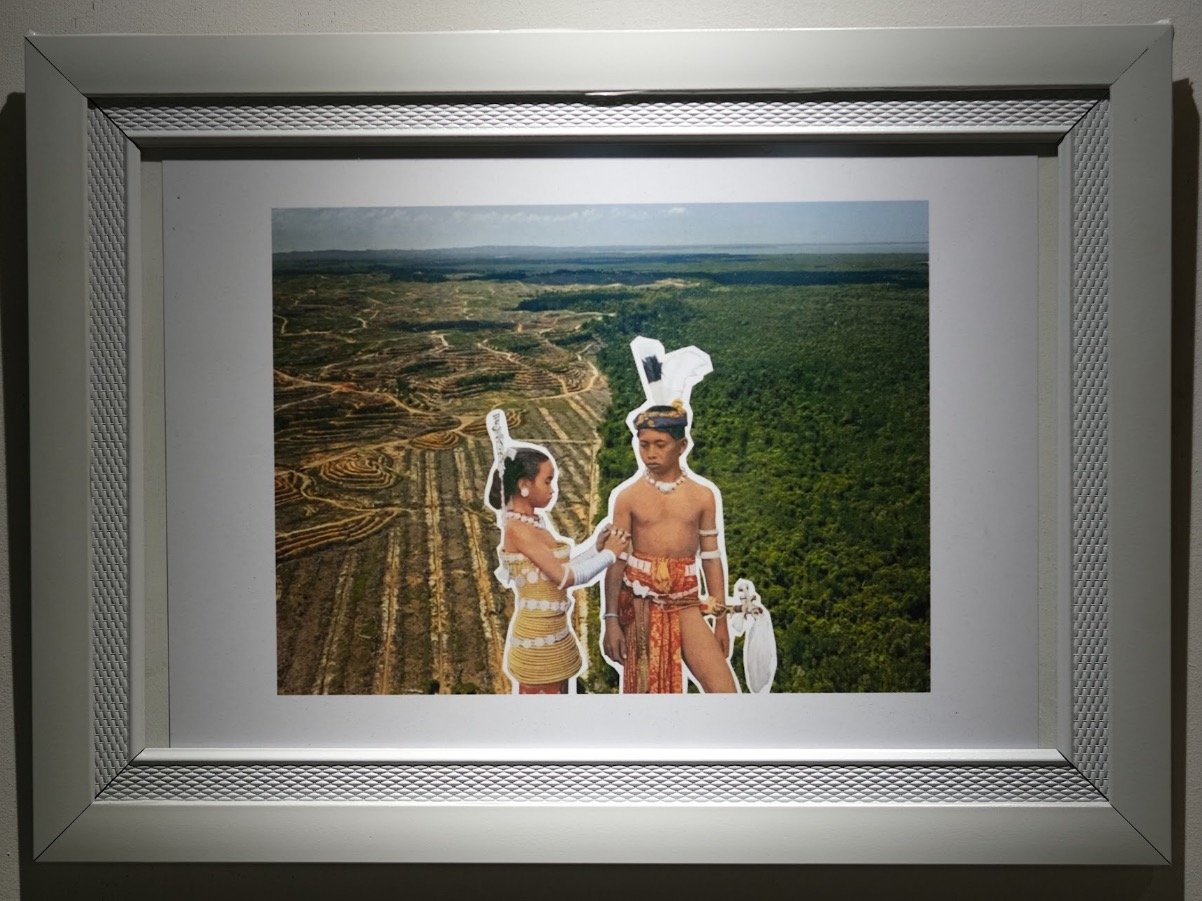
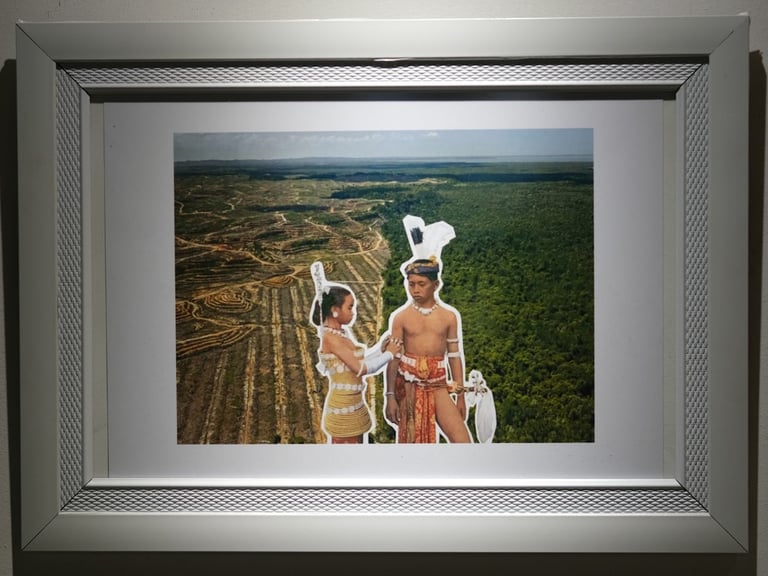
Title : Heart Break of Borneo
Concept : Collage Art
Medium : Digital Art
Dimensions : 42.0 x 59.4 cm
Year : 2022
“Heart Break of Borneo” takes its title from the Heart of Borneo initiative, a conservation commitment by Brunei, Malaysia, and Indonesia to protect the island’s rainforests. This artwork powerfully depicts the physical devastation caused by national borders, highlighting stark differences in deforestation rates across Borneo. While borders are social constructs, their impacts are tangible: one side may be devastated by logging and oil palm plantations, while the other remains relatively untouched.
The work foregrounds the suffering of Indigenous communities, who, despite being the original stewards of these lands, face displacement and the loss of ancestral territories. National governments often claim large portions of rainforest, frequently selling customary lands to corporations for exploitation. The piece emphasises how these lands, vital for the survival of Indigenous peoples, are systematically taken, disrupting traditional ways of life.
Furthermore, “Heart Break of Borneo” highlights the additional layers of tragedy faced by nomadic tribes, whose cultural identities are threatened by the imposition of borders. Forced migration often renders them stateless, as many Indigenous communities are unrecognised by national authorities. The work serves as a poignant commentary on the environmental and cultural destruction wrought by arbitrary boundaries, while advocating for the rights and recognition of marginalised communities.